Parking Lot Line Striping in McKinney, TX
Typical cost: $4 – $20 per stall on a re-stripe depending on lot size; new layouts quoted from the site plan
Lines are the first thing a visitor reads about a property, and Texas sun erases them faster than almost anywhere — a stripe that looked crisp at Christmas can be a ghost by August. A re-stripe over an existing layout is the fastest, cheapest improvement a commercial property can buy: the crew chalks off the lot in sections, lays fresh traffic-grade paint over the old lines, and the whole thing typically reopens the same night.
New construction is its own discipline. A first-time layout comes off the site plan — stall dimensions, drive aisle widths, accessible stall counts and van aisles, fire lanes, cart corrals, directional arrows — and it has to match what the city approved, because the certificate of occupancy inspection will check. With the amount of retail, church and school construction moving up the 380 and 75 corridors right now, getting the striping contractor involved before the asphalt cures saves everyone a second mobilization.
We stripe with DOT-grade traffic paint, stencil the stalls, arrows, visitor and no-parking markings, and paint curbs where the plan calls for them. For property managers running multiple sites, we bid the portfolio as a route — one contract, one schedule, every lot on a cycle instead of a crisis.
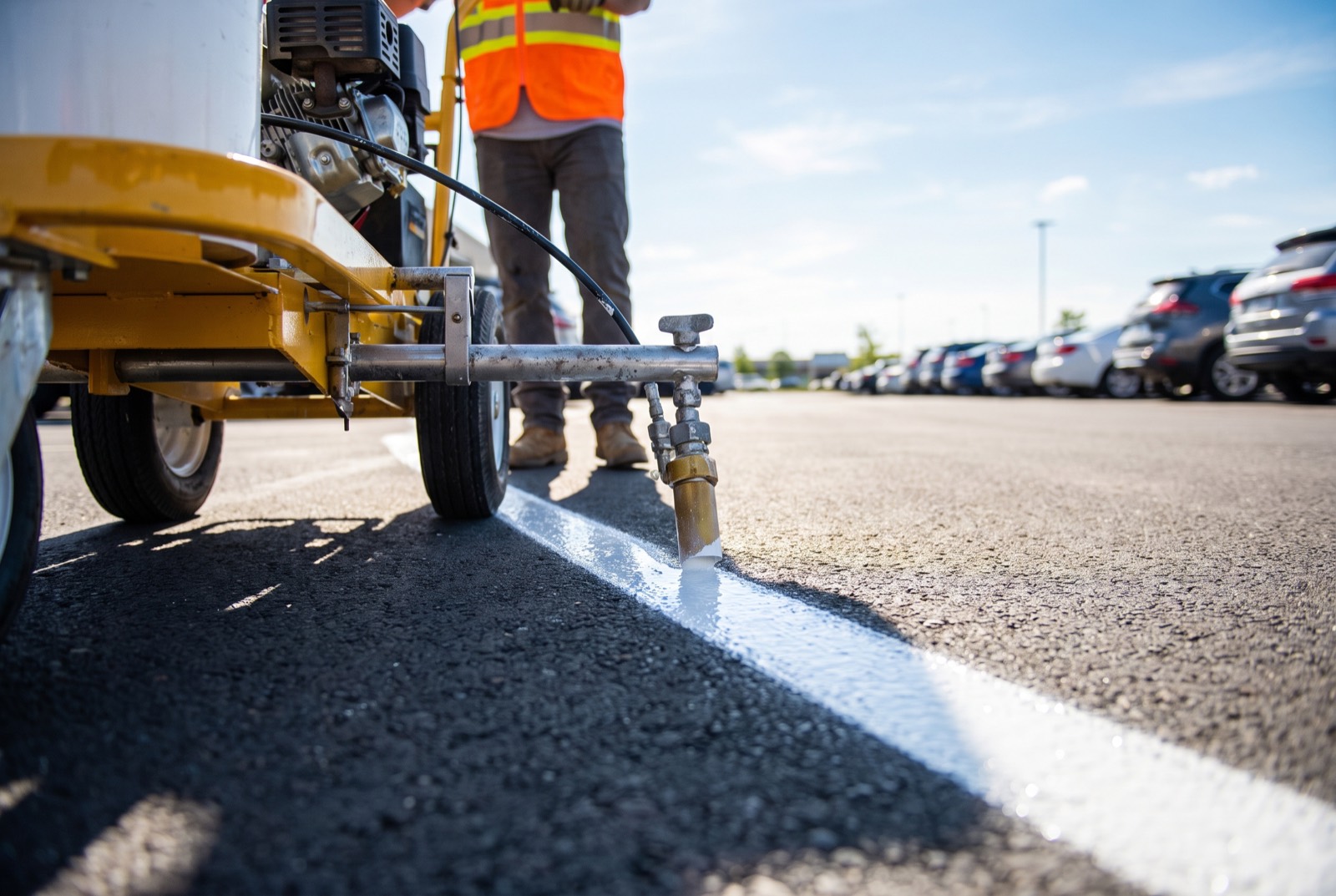
Machine-laid DOT-grade paint - straight lines, clean edges, dry within the hour.
What is included
- Re-stripes over existing layouts, usually completed overnight
- New layouts from the site plan for construction projects
- Stencils, arrows, curbs, cart corrals and custom markings
- DOT-grade traffic paint, machine-applied lines
- Portfolio pricing for property managers with multiple sites
How a re-stripe actually goes
Most of the job happens before the crew arrives. The lot gets measured from aerial imagery, the bid is priced per stall off that measurement, and the layout questions get settled up front — keep the existing pattern, or fix the things that never worked, like a cart corral in the wrong place or an access aisle that keeps getting parked in. On the night of the work, the crew cones off a section, blows the surface clean, and runs the striping machine over the old lines, using them as the template. Stencils — accessibility symbols, arrows, VISITOR and NO PARKING lettering — are sprayed through templates after the long lines are down. Cones stay up until the paint takes traffic, which in warm Texas weather is usually under an hour. A typical 60-stall lot is a single overnight: closed at ten, open for business by morning.
Stall sizes, aisles and layout choices
A standard parking stall in North Texas runs 9 feet wide by 18 feet deep, with two-way drive aisles around 24 feet. Those numbers are not decoration — stalls striped too narrow generate door dings and complaints, and aisles striped too tight generate fender benders. Angled stalls at 60 degrees trade a few spaces for one-way flow that is easier to pull in and out of; 90-degree stalls maximize the count. A re-stripe is the cheapest moment to fix a layout, and a careful one sometimes finds extra stalls the old layout wasted. If the lot serves the public, the accessible stall count, van aisles and signage get checked against current standards at the same time — layouts striped a decade ago are often quietly out of date.
Waterborne or solvent paint?
Both are DOT-grade traffic paints, and a straight answer about which one goes on your lot belongs in the bid. Waterborne acrylic is the modern standard for most of the striping season — it dries to traffic fast, holds its white, and meets the low-VOC rules most North Texas cities enforce. Solvent-based paint earns its keep in the cold months, because it cures properly at pavement temperatures where waterborne will not. New asphalt takes two coats either way: fresh pavement drinks the first coat, and the second is what you actually see. A bid that does not say what paint and how many coats is not a bid you can compare.
When a lot has been re-striped one time too many
Paint stacks up. After several re-stripes the lines sit on a ridge of old coats, edges go fuzzy, and ghost lines from past layouts start showing through — confusing for drivers and ugly from the street. The reset button is either blackout paint over the old markings or, better, a sealcoat: it erases every line at once, protects the asphalt while it is at it, and gives the new stripes a clean black canvas. That is one more reason striping and sealcoating belong on the same maintenance cycle instead of being bought separately.
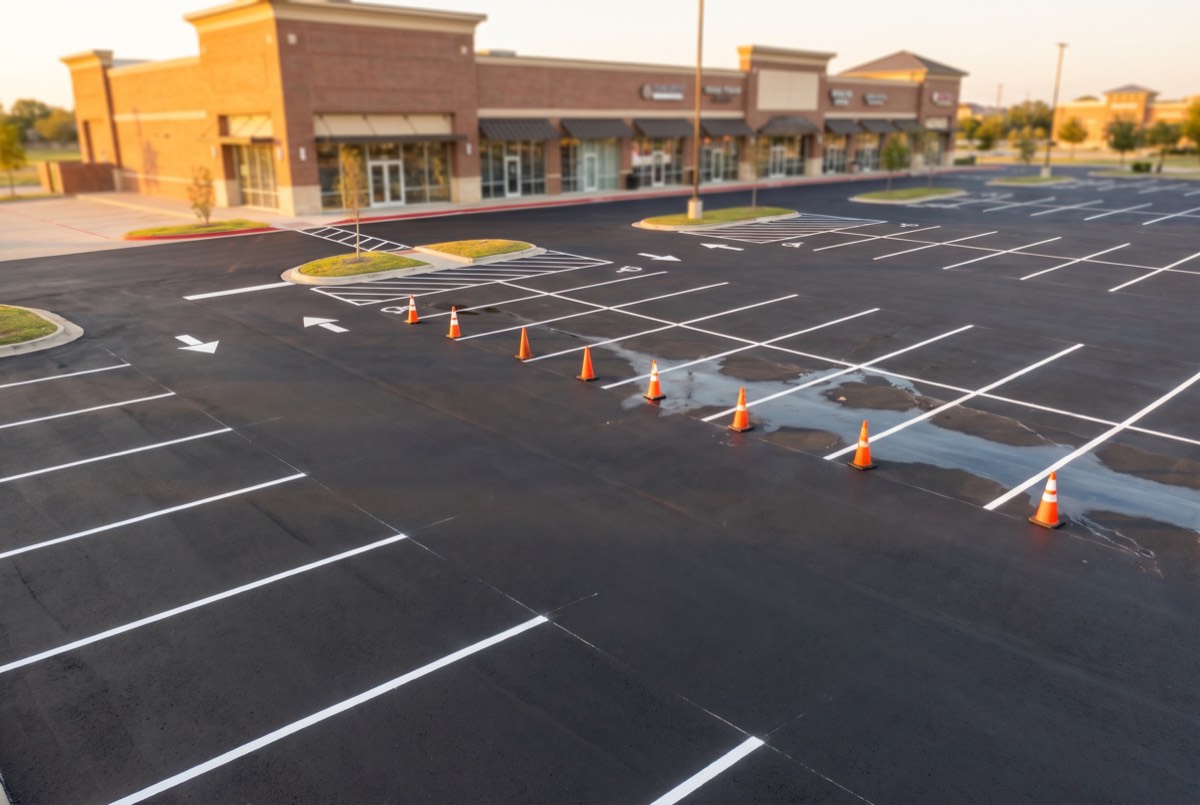
A finished overnight re-stripe - crisp lines, fresh arrows, cones off by morning.
Serving McKinney, Frisco, Allen, Plano, Prosper and nearby
This service is available across our full coverage area. See the service area map for the complete list, or call (469) 203-8029 to check a specific address.